
We invite you to join an international seminar dedicated to advancing the future of smart cities. The Kraus Seminar on Smart City Research (SCRES'26) is sponsored by Kraus/Fredonia Conversations in Discipline and co-sponsored by the IEEE Buffalo Section. This event will feature distinguished researchers from around the world presenting their latest work on critical topics such as artificial intelligence in urban systems, sustainable infrastructure, intelligent transportation, IoT-enabled services, and data-driven governance. The seminar aims to foster collaboration, share innovative solutions, and explore strategies for building resilient, efficient, and inclusive urban environments.
Date: April 27, 2026
Time: 1:30 pm- 5:30pm
Venue: S204ABC, Williams Center, SUNY Fredonia
Register Free: Kraus Seminar on Smart City Research (SCRES'26) - Registration Form
Organizers: Dr. Junaid Zubairi (chair), Dr. Megan Johnson (co-chair), Dr. Syed Haider (co-chair)
Program: Download
Don’t miss this opportunity to engage with thought leaders and contribute to shaping the cities of tomorrow!
Keynote Speakers
| The Design of an Adaptive Architecture for Autonomous All-Terrain Vehicles | |
| Dr. James M. Conrad Professor and Associate Chair Dept. of Electrical and Computer Engineering UNC Charlotte, 9201 University City Blvd Charlotte, NC 28223 | |
Abstract: Many consider autonomous vehicles one of the most promised technologies that have still not yet been widely delivered. While this may be true of automobiles and robo-taxis, much work in autonomous navigation has been accomplished in the realm of farm equipment and construction equipment. Nonetheless, all of these implementations rely on maps, GPS and other technologies (LIDAR, camera) for localization and obstacle avoidance, but they typically do not build their own maps. Therefore, in GPS-denied environments, they are often “driving blind”. Dr. Conrad’s research concentrates on off-road vehicles suitable for city parks and urban recreational areas. He and his team use LIDAR and camera data to assist in navigation in GPS-denied environments, particularly in forest environments. He will present information about how his research team has created an inexpensive system using an All-terrain Vehicle (ATV) that can autonomously drive “off-road”. He will also present on the technology his team has developed to allow an ATV to follow people or vehicles in any environment. | |
Speaker biography: James M. Conrad received his bachelor's degree in computer science from the University of Illinois, Urbana, and his master's and doctorate degrees in computer engineering from North Carolina State University. He is currently Interim Department Chair and Professor of Electrical and Computer Engineering at the University of North Carolina at Charlotte. He has served as an assistant professor at the University of Arkansas and as an instructor at North Carolina State University. He has also worked at IBM, Ericsson/Sony Ericsson, and BPM Technology. Dr. Conrad is a Professional Engineer, a Senior Member of the IEEE and a Certified Project Management Professional (PMP). He served on the IEEE Board of Directors as Region 3 director for 2016-2017, and again as a director in 2020 when he also served as IEEE-USA President. He also served as IEEE-Eta Kappa Nu Honor Society President in 2022. He is the author of numerous books, book chapters, journal articles, and conference papers in the areas of embedded systems, robotics, parallel processing, and engineering education. | |
| Cyber-Secure Operation of Networked Microgrids for Enhancing the Power Grid Resilience in Smart Cities | |
| Dr. Mohammad Shahidehpour Professor, IEEE Fellow Robert W. Galvin Center for Electricity Innovation Illinois Institute of Technology Chicago, IL 60616 | |
| Abstract: The advances in artificial intelligence technologies for enhancing the operational methodologies in distributed power systems together with significant progress in utilizing the information technology have strengthened the resilience of networked microgrids (NMGs), while the increasing role of cyber-physical NMGs has exposed them to greater physical and cyber risks. To this end, this presentation will examine cyber-secure mandates for NMG operations in power grids. A taxonomy of cyber vulnerabilities is provided, and the operational consequences of cyber incidents will be analyzed. The presentation will include a discussion on cyber-physical networks in NMGs and describe how coordinated cyber-physical operations can support power grid resilience. The growing potentials for engaging advanced information technologies to strengthen the power system security will be evaluated and applications of software-defined networking, blockchain, artificial intelligence, and quantum technology will be discussed for secure and efficient control of NMGs. A layered defense in depth framework is proposed that assigns resilience measures across sensing, local control, distributed energy resources (DERs), aggregated multi-DER coordination, sub-system microgrid control, and system-level coordination. The illustrative case studies for cyber-secure operation of NMG will include cyber-physical contingency-based risk assessment, real-time co-simulation testbeds, human factors in cybersecurity analysis, and integration pathways for emerging technologies to increase power system resistance and operational flexibility. | |
| Speaker biography: Dr. Mohammad Shahidehpour is a University Distinguished Professor and Galvin Chair Professor in the Electrical and Computer Engineering Department at Illinois Institute of Technology (IIT). He also serves as the Director of the Robert W. Galvin Center for Electricity Innovation at IIT. He has over 45 years of experience with power system operation, planning, and control and has completed several major projects for the electric energy sector throughout the world. His project on Perfect Power Systems has converted the entire IIT Campus to an islandable microgrid. Dr. Shahidehpour was the recipient of several technical awards including the IEEE Burke Hayes Award for his research on hydrokinetics, IEEE/PES Outstanding Power Engineering Educator Award, IEEE/PES Ramakumar Family Renewable Energy Excellence Award, IEEE/PES Douglas M. Staszesky Distribution Automation Award, and the Edison Electric Institute’s Power Engineering Educator Award. He has co-authored 6 books and over 1000 technical papers on electric power system operation and planning and served as the founding Editor-in-Chief of IEEE Transactions on Smart Grid and IEEE Energy Sustainability magazine. Dr. Shahidehpour is the recipient of the 2009 honorary doctorate from the Polytechnic University of Bucharest. He is a Fellow of IEEE, Chinese Society of Electric Engineers (CSEE), American Association for the Advancement of Science (AAAS), and National Academy of Inventors (NAI). He is an academician of the US National Academy of Engineering (NAE). He is also listed as a highly cited researcher on the Web of Science (ranked in the top 1% by citations demonstrating significant influence among his peers). | |
| Realms of Smart World: Smart Decisions and Specific Actions, Powered by IoT and AI | |
| Dr. M. Yasin Akhtar Raja Professor, SPIE Fellow IEEE Life-Senior Member Center for Optoelectronics & Optical Communications., UNC Charlotte | |
| Abstract: Rapid advances in ICT have enabled intelligent, networked automation through IoT, M2M communication, and AI. Smart sensing and data systems support autonomous decision-making across cities, industry, healthcare, and homes. The keynote talk presents architectures, applications, future directions, and highlights security challenges and vulnerabilities in smart technologies. | |
Speaker biography: Prof. Dr. M. Yasin Akhtar Raja is a senior Professor at the Department of Physics and Optical Science, UNC Charlotte. He received his B.Sc. in the Physics & Mathematics Punjab University, Lahore, Pakistan, his M.Sc. & M. Phil in Laser-Physics at the Quaid-i-Azam University Islamabad, Pakistan, and followed by his Ph.D. in Optical Physics (Optoelectronics) at the University of New Mexico, Albuquerque, NM, USA. He was a Research Associate at the Electrical Engineering Department, University of New Mexico, Albuquerque NM, USA from 1988 to 1989. He joined University of North Carolina, Charlotte in 1990 as an Assistant Professor at the Department of Physics and was promoted to an Associate Professor with a permanent tenure at the Department of Physics and Optical Science in 1996 and promoted to full professor in 2004. Ever since joining UNC Charlotte, he has served in various faculty positions with leadership roles in planning and growth programs committees’ chair. His research expertise in Optical Science and Engineering spans Nanophotonic/Optoelectronic Devices and Components, Integrated Photonics and Optical Communication Networks as well as recent expansion to Internet of Things. He has several patents and has published over 200 articles in peer-reviewed journals, book chapters, and refereed conference proceedings. He also co-edited a book on “Nanotechnology for Telecommunications”, in June 2010. His Research Interests and activity included the design, fabrication, and characterization of VCSELs (his pioneer work), lasers for Optical Interconnects , High-power and short-pulse lasers, LEDs, LDs, EDFA & Raman Amplifiers, Optical Networks including PONs, and recently IoT and UV-LED applications and Solar energy harvesting application devices and sub-systems. Prof. Raja also started and established International Symposia/ Conferences series IEEE “HONET-ICT” [ http://honet-ict.org ] with initial 5-years seed-funding and co-sponsorship by NSF (USA) since 2004. Prof. Raja is a Fellow of SPIE, and a Life-Senior Member IEEE and Optica (formerly, OSA). | |
Invited Speakers
| Current solutions and emerging challenges in smart traffic management | |
| Dr. Sahar Idwan, Prof., Director of the Women's Studies in the Community Center Department of Computer Science and Applications Faculty of Prince Al-Hussein Bin Abdallah II for Information Technology The Hashemite University, Zarqa, Jordan | |
Abstract: The increasing complexity of urban mobility has made intelligent traffic management a critical component of smart cities. Advances in sensing technologies, connected infrastructure, and data collection platforms have enabled the generation of large-scale traffic data, creating new opportunities for data-driven decision-making. However, effectively transforming this data into actionable and timely traffic control strategies remains a significant challenge. This talk reviews current solutions and emerging challenges in smart traffic management, drawing on a comprehensive survey of recent research. It examines major technological approaches used to analyze and manage traffic data, including machine learning, fuzzy logic, statistical methods, graph-based models, and hybrid systems. Each approach is discussed in terms of its strengths, limitations, and suitability for real-world deployment. The talk further highlights open challenges such as scalability, real-time responsiveness, handling heterogeneous and dynamic data, and the lack of standardized benchmark datasets. By synthesizing insights across multiple technical perspectives, this talk aims to support researchers and practitioners in understanding how traffic data can be transformed into intelligent decisions for more efficient, adaptive, and sustainable urban transportation systems. | |
| Speaker biography: Sahar Idwan is a Full Professor of Computer Science at The Hashemite University, Jordan. She earned her PhD from the Colorado School of Mines (USA) and has held several senior academic and administrative leadership roles, including Dean of the Prince Al-Hussein Bin Abdallah II Faculty of Information Technology, Director of the E-Learning Center. She currently serves as Director of the Women’s Studies in the Community Center. Her research has evolved from applied algorithms, mobile computing, and wireless technologies to encompass smart cities, intelligent transportation systems, IoT, machine learning, graph-based and hierarchical traffic management. She has published extensively in leading international journals and conferences, with recent contributions focusing on smart traffic congestion control and emerging technologies for urban mobility. | |
| Smart City Service Delivery Using UAVs | |
| Dr. Muhammad Jaseemuddin Program Director, Computer Networks Program Department of Electrical, Computer and Biomedical Engineering Toronto Metropolitan University, Canada | |
| Abstract: As of 2007, the global urban population exceeded the global rural population. Mega cities are emerging with the population of many cities exceeding 10 million. Growth in the urban population brings a major shift in the deployment and management of urban infrastructures as it brings forward increased demands of services and resources, resulting in higher resource consumption. Unmanned Aerial Vehicles (UAVs)are used for a variety of smart city services due to their low cost, 3D-position flexibility, and real-time mobile service delivery. With Line-of-Sight (LOS) links, the UAVs provide on-demand communication to the ground users for different critical services with QoS requirements, such as monitoring of medical emergency in crowds through wireless body area network (WBAN). In addition to mobility and trajectory management, Energy Efficiency (EE), real-time data transmission, and channel access are some of the challenges related to their integration in a communication network. In this talk the networking and service delivery aspects of UAVs will be covered for smart city applications. The focus of UAV networking will be on energy efficient provisioning of Ultrareliable Low Latency (URLLC) services. The service delivery will cover the design and implementation of a Smart City Application Platform (SCAP), which allows for the deployment and management of multiple services and resources. Finally, the viability of SCAP will be discussed for airspace management of autonomous delivery drones in which many drone operators can benefit from a single shared, coordinated airspace management system. | |
| Speaker biography: Dr. Muhammad Jaseemuddin received B.E. from N.E.D. University of Engg. & Tech., Karachi, Pakistan, in 1989, M. S. from The University of Texas at Arlington in 1991, and Ph.D. from The University of Toronto in 1997. He worked as a post-doctoral research fellow in the Network Architecture Lab at The University of Toronto on Network Management using Virtual Network. He worked in Advanced IP group and Wireless Technology Lab (WTL) at Nortel Networks from 1998 to 2001. He worked on Wireless Service Delivery Platform and UMTS VHE prototype for mobile service delivery. He contributed to the development and implementation of Open IP suite of IP protocols. In WTL, he worked on QoS, Routing and Handover issues in mobile wireless IP access network. He has been in the faculty of Toronto Metropolitan University since 2002, where he is currently a Professor in the department of electrical, computer and biomedical engineering. He is the Director of Network Engineering and Automation Research (NEAR) Lab. He is also a researcher in the Wireless Networking and Communication Research (WINCORE) Lab at Toronto Metropolitan University. | |
| Systematic investigation of oversampling strategies designed to enhance the robustness of traffic data modelling | |
| Dr. Wael AlEtaiwi Computer Science Princess Sumaya University for Technology (PSUT) Jordan | |
Abstract: Urban mobility systems in smart cities generate vast amounts of traffic data from sensors, cameras, connected vehicles, and infrastructure networks. However, these datasets often exhibit severe imbalance—critical events such as congestion peaks, incidents, and under-represented travel patterns occur far less frequently than routine traffic conditions. This imbalance undermines the reliability of conventional machine learning models, leading to biased predictions and suboptimal decision support for traffic management and control. In this talk, I present a systematic investigation of oversampling strategies designed to enhance the robustness of traffic data modelling in smart city environments. We explore both classical and advanced oversampling techniques—including Synthetic Minority Over-sampling Technique (SMOTE) variants, generative models, and domain-aware resampling—that address class imbalance while preserving the underlying spatiotemporal structure inherent in traffic datasets. Through extensive experiments on real-world traffic data, I demonstrate that the choice and calibration of oversampling methods can substantially improve predictive performance for rare yet high-impact traffic events, such as severe congestion and incident detection. The talk also discusses practical considerations for integrating these strategies into smart transportation systems, including scalability, computational cost, and real-time operational constraints. By enhancing model reliability under data imbalance, oversampling not only improves traffic prediction and anomaly detection but also lays a stronger foundation for adaptive traffic control, equitable resource allocation, and proactive urban planning. This talk contributes to the broader goal of transforming raw traffic data into resilient and actionable intelligence for smarter, safer, and more efficient urban transportation systems. | |
Speaker biography: Dr. Wael AlEtaiwi is an Assistant Professor of Computer Science at Princess Sumaya University for Technology (PSUT). His research focuses on machine learning, graph-based data mining, and advanced modeling techniques for complex and imbalanced datasets. He develops robust predictive frameworks designed to improve model reliability and performance in real-world, high-impact applications. His research applications span smart cities, traffic data modeling, business analytics, and public-sector decision support systems, with a strong focus on transforming complex data structures into actionable intelligence. Through his work, Dr. Etaiwi aims to advance trustworthy and resilient AI systems capable of operating effectively under data imbalance and structural complexity. Dr. AlEtaiwi teaches undergraduate and graduate courses in artificial intelligence, data engineering, and business-oriented AI applications, emphasizing practical, real-world problem solving. Through his research and teaching, Dr. Etaiwi aims to bridge the gap between theoretical advances in machine learning and impactful applications in smart cities, cybersecurity, and public-sector analytics. | |
| AI in Smart Cities: Ethical Challenges and Accountability | |
| Ahmed S. Khan, Ph.D. Professor of Electrical Engineering Fulbright Specialist Scholar Ex. Dean of the College of Engineering & Information Sciences DeVry University, Addison, Illinois, IL 60101, USA | |
| Abstract: The emerging technologies of the Fourth Industrial Revolution (4IR) are reshaping the way we live, work, interact, and educate. Innovations such as Artificial Intelligence (AI), Big Data, the Internet of Things (IoT), Augmented Reality, Blockchain, Robotics, Drones, Nanotechnology, Genomics and Gene Editing, Quantum Computing, and Smart Manufacturing are driving rapid transformation across every sector of society. Unlike previous industrial revolutions—where change unfolded over centuries or decades—4IR is accelerating at an unprecedented pace. The time required to reshape global systems is now measured in months, not years. Among these technologies, Artificial Intelligence (AI) stands out as the most transformative force in human history. It is essential that today’s and tomorrow’s stakeholders—policymakers, educators, and leaders—are equipped not only with technical knowledge of AI, but also with a deep understanding of its social, ethical, and unintended consequences. This awareness is critical to guiding its responsible use, identifying its failures, and shaping a humane and visionary future. The rapid integration of artificial intelligence (AI) into smart cities is transforming urban governance, service delivery, and everyday life. AI enabled systems support traffic management, public safety, utilities, and digital governance by processing large volumes of data collected from sensors, cameras, mobile devices, and online platforms. While these technologies promise greater efficiency, sustainability, and responsiveness, they also raise critical ethical concerns related to privacy, surveillance, bias, accountability, and social inclusion. This presentation examines the ethical implications of AI in smart cities with a particular focus on the role and responsibility of governments, technology providers, and informed, engaged citizens who actively shape the ethical use of AI in urban environments. | |
| Speaker biography: Dr. Ahmed S. Khan is a Fulbright Specialist Scholar selected by U.S. Department of State’s Bureau of Educational and Cultural Affairs (ECA). Dr. Khan has more than 40 years of progressively responsible experience in instruction (online and onsite), applied research, curriculum development, program and institutional accreditation (ABET & NCA/HLC), management, and supervision of academic programs at DeVry University. Dr. Khan held many academic positions that include Senior Processor, Chair, and Dean of the College of Engineering & Information, DeVry University, Addison, Illinois, USA. Dr. Khan also served as the National Curriculum Manager at the national headquarters of DeVry University, where he provided leadership by supervising and managing curriculum development and implementation of BSEEt, MSEE & MBA online & onsite programs at 25 DeVry campuses located in the United States and Canada. Dr. Khan received an MSEE from Michigan Technological University, an MBA from Keller Graduate School of Management, and his Ph.D. from Colorado State University. His research interests are in the areas of Nanotechnology, New Teaching & Learning Techniques, and Social and Ethical Implications of Technology. He is the author of many educational papers and presentations. He has authored/co-authored many technical books, including the Science, Technology & Society (STS) series of books (used globally in the academic programs of more than 200 Universities) that include Technology and Society: Issues for the 21st Century & Beyond, and Nanotechnology: Ethical and Social Implications, to stimulate, inspire, and provoke awareness of technology’s impact on society. Dr. Khan is a life senior member of the Institute of Electrical and Electronics Engineering (IEEE), and a life member of American Society of Engineering Education (ASEE). Dr. Khan also served as program evaluator for the accreditation agency ABET. | |
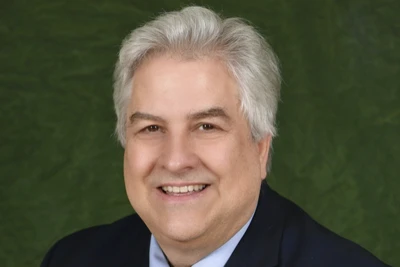
Dr James Conrad
Keynote Speaker
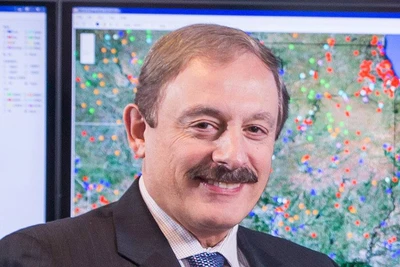
Dr Mohammad Shahidehpour
Keynote Speaker
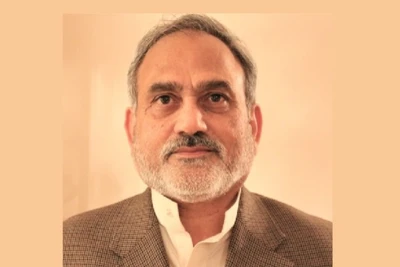
Dr Yasin Raja
Keynote Speaker
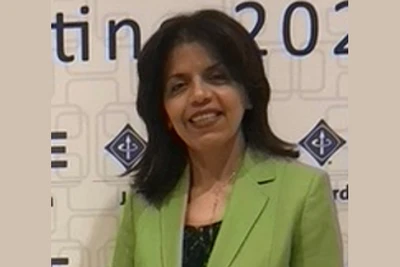
Dr Sahar Idwan
Speaker
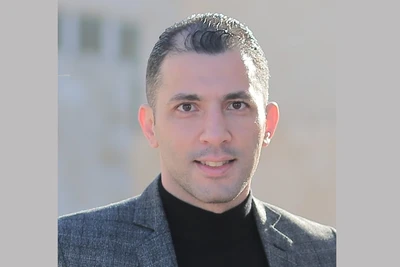
Dr Wael Etaiwi
Speaker
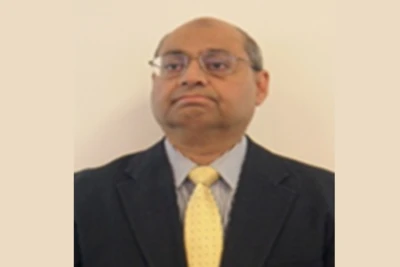
Dr Ahmed S Khan
Speaker